Your Skin Deserves More Than a One-Size-Fits-All Routine.

Flawless Skin Boutique’s exclusive skin maintenance membership, created for those who want to look refreshed, radiant and beautifully maintained all year long.
.png)
.svg)

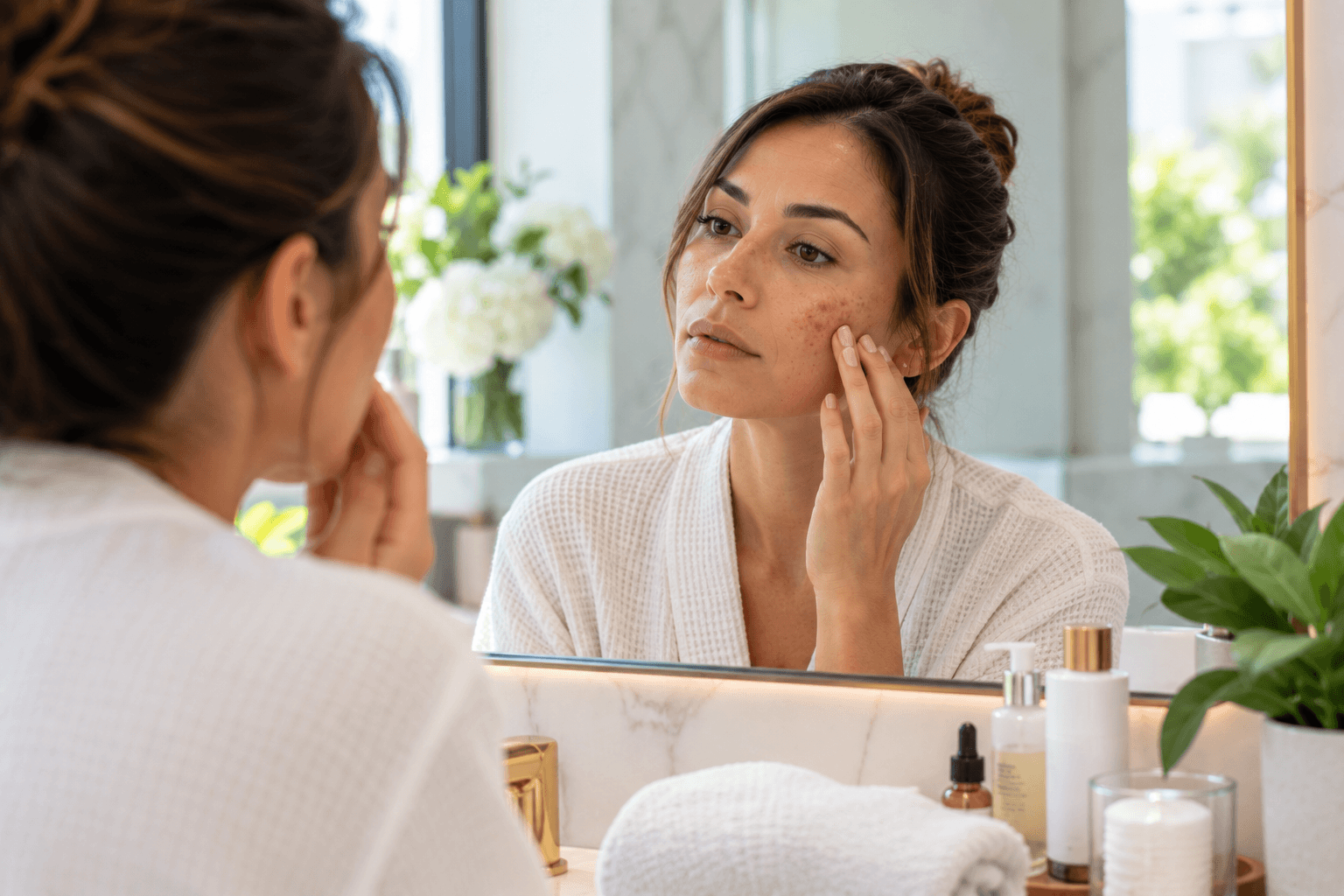
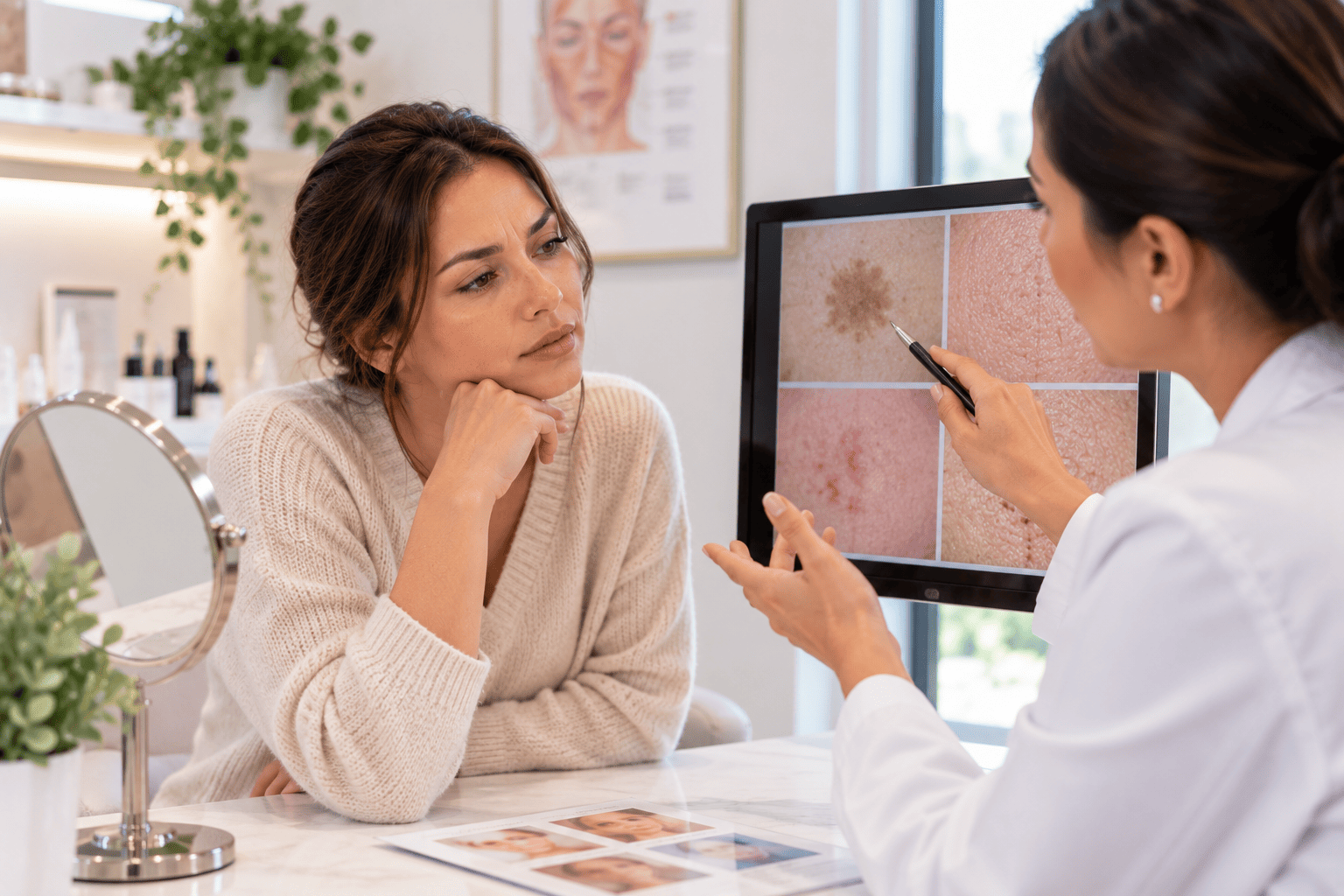
If you've noticed a cluster of small, darker spots on your cheeks, forehead, or the backs of your hands that seem to get a little more noticeable every year, you're looking at one of the most common skin concerns we see at our Buckhead med spa. They're not random, and they're not something that just happens with age in a vague, unavoidable way. They have a specific cause, and understanding it makes a real difference in how to treat them.
This guide walks through why dark spots form, what makes certain areas more prone to them, and what actually helps fade them over time. Updated August 2026 with current treatment information.
Dark spots, often called sun spots or age spots, are a form of hyperpigmentation caused primarily by cumulative sun exposure over the years. When skin is exposed to UV rays, it produces more melanin as a protective response. Over time, and with repeated exposure to the same areas, that melanin can cluster unevenly, creating visible spots that are darker than the surrounding skin.
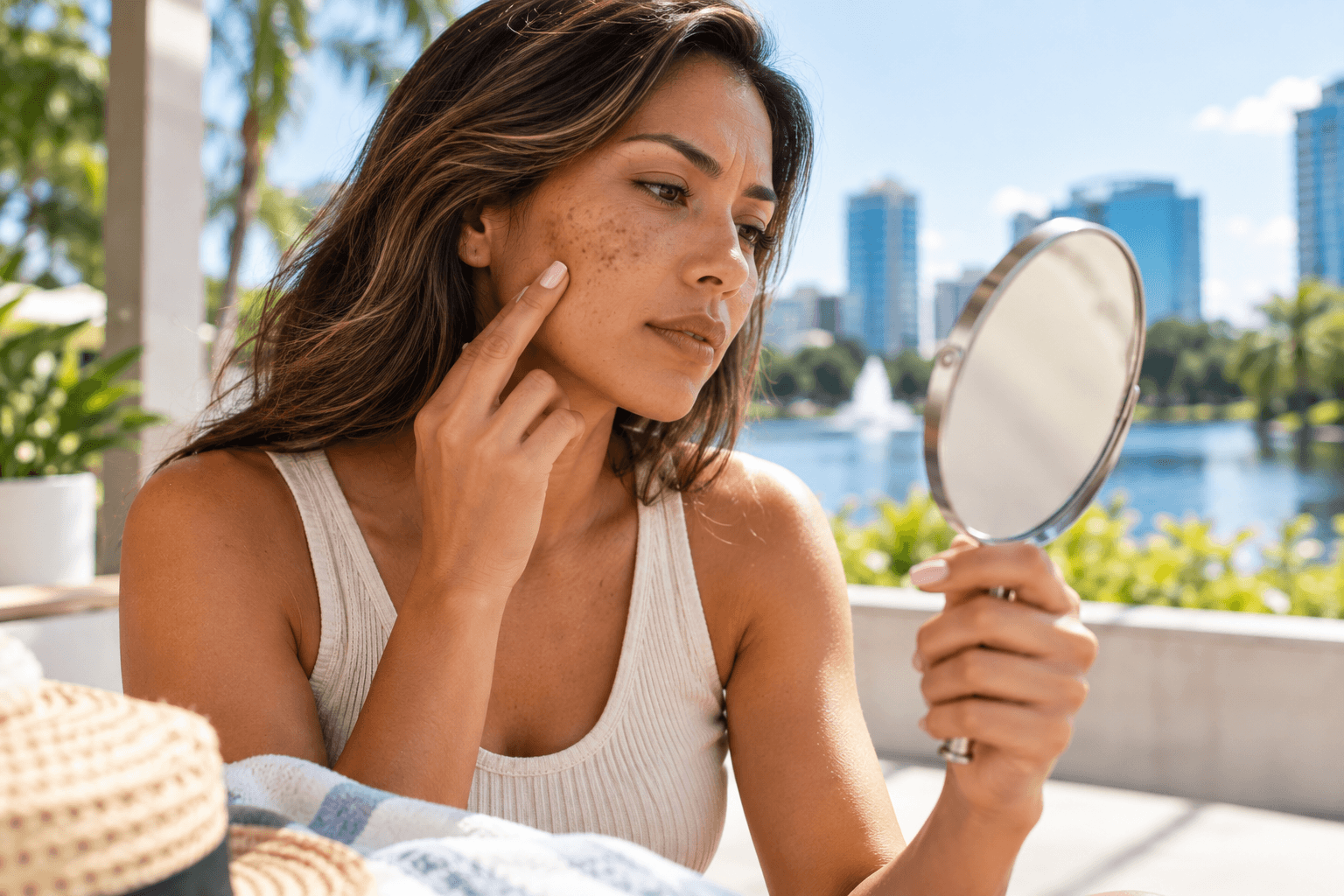
It comes down to which areas get the most consistent sun exposure over the years. The cheeks, forehead, shoulders, chest, and the backs of the hands are classic locations because they're rarely covered, even when the rest of the body is protected by clothing. Once melanin clusters in these spots, they tend to reappear or darken further in the same locations with continued exposure.
Not quite, though they're related. Freckles are typically smaller, often appear earlier in life, and can fade somewhat in the winter months. Sun spots, sometimes called age spots or lentigines, tend to be larger, appear later in adulthood, and are generally more persistent once they've formed.
Both factor in, but sun exposure is the bigger driver. Age matters mostly because it reflects more years of cumulative sun exposure, not because skin inherently develops spots simply from getting older. This is part of why people who've spent a lot of time outdoors, whether from work, sports, or lifestyle, often notice more pronounced dark spots than others their same age.
Yes. Healed acne or skin irritation can leave behind post-inflammatory marks that look similar to sun spots but stem from a different cause entirely. Hormonal changes can also trigger a related but distinct condition called melasma, which tends to appear as larger, more symmetrical patches rather than individual spots.
Once melanin becomes concentrated in a specific area of skin, it settles into the cells there and doesn't disperse quickly through the skin's normal renewal process. Left alone, that pigmentation can persist for years, and continued sun exposure tends to reinforce it rather than allow it to fade.
Sunscreen is essential for preventing new spots and keeping existing ones from getting darker, but it generally won't fade spots that have already formed. That requires a treatment that actively encourages the skin to turn over and replace the pigmented cells.
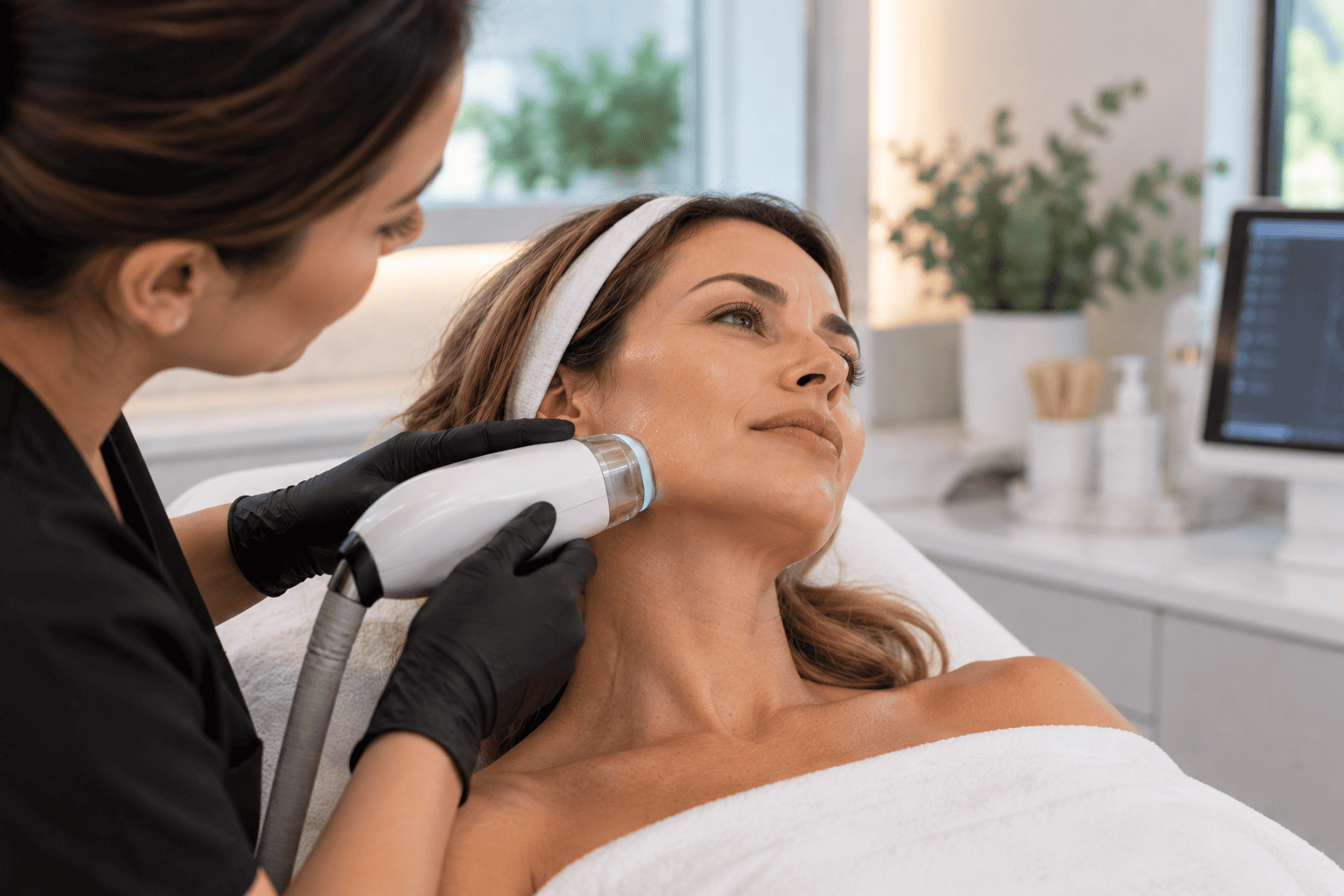
At our practice, the most relevant option for fading dark spots is microneedling using the SkinPen device combined with AnteAGE MD serums.
Microneedling works by creating tiny, controlled micro-injuries in the skin, which triggers the body's natural healing response. As part of that healing process, skin cells turn over more quickly, which helps fade dark spots and encourages more even pigmentation to develop over time. It's a gradual process, but it works with your skin's own repair mechanism rather than trying to bleach or strip pigment directly.
Most clients see the best results with a series of three to six sessions, spaced a few weeks apart, allowing the skin's natural healing cycle to progress between treatments.
Downtime is minimal. Skin may look a bit red and feel slightly sensitive, similar to a mild sunburn, for a short period, but most people return to their normal routine shortly after.
For clients dealing with dark spots alongside broader texture concerns, like enlarged pores or fine lines, Venus Viva MD may be discussed as an option during a consultation. It uses NanoFractional Radio Frequency technology to improve overall skin texture and is designed to be safe for all skin types and tones.
Atlanta's warm climate means a lot of time spent outdoors throughout the year, whether that's tennis at a local club, weekends at the lake, or simply walking to lunch during the summer months. That level of consistent sun exposure is exactly the kind of pattern that leads to dark spots forming over time, which is part of why this is such a common concern among our local clients.
Daily sunscreen use is the single most effective prevention strategy, along with sun protective clothing and hats during peak sun hours. This matters both before and after treatment, since new spots can continue to form even after existing ones have been addressed.
Are dark spots dangerous, or just a cosmetic concern? Most dark spots caused by sun exposure are harmless and purely cosmetic. That said, any new or changing spot should be evaluated by a dermatologist to rule out anything more serious.
How long does it take for dark spots to fade with treatment? Most clients notice gradual improvement over a series of microneedling sessions spaced a few weeks apart, since the process relies on the skin's natural cell turnover cycle.
Will dark spots come back after treatment? New spots can form with continued sun exposure, which is why daily sunscreen use is an important part of maintaining results long term.
Is microneedling safe for treating dark spots on the hands as well as the face? Microneedling is most commonly performed on the face, though your provider can discuss the best approach for other commonly affected areas during a consultation.
What's the difference between dark spots and melasma? Dark spots are typically caused by cumulative sun exposure and appear as smaller, more defined spots, while melasma tends to appear as larger, symmetrical patches and is often linked to hormonal changes.
Dark spots aren't a sign that anything is wrong, they're really just your skin's record of years of sun exposure. The good news is that record can be gradually faded with the right approach, and prevented from adding new entries going forward. If this sounds like your skin, our Buckhead team can walk you through what a realistic treatment plan looks like. Book an appointment or browse our full list of services to learn more.

Our Collagen Elixir is a potent skincare ally, promoting elasticity and hydration. Its rich blend of amino acids supports skin regeneration, reducing wrinkles and fine lines for a youthful, radiant complexion.


.png)