Your Skin Deserves More Than a One-Size-Fits-All Routine.

Flawless Skin Boutique’s exclusive skin maintenance membership, created for those who want to look refreshed, radiant and beautifully maintained all year long.
.png)
.svg)

Try this the next time you're in front of a mirror. Raise your eyebrows like you're surprised, then relax your face. Notice how a faint line or two lingers for a second after your expression drops? Now imagine that happening thousands of times a year, every time you laugh, squint in the sun, or concentrate on a screen. Eventually, those lines stop fading when your face relaxes. They just stay.
This is one of the most common concerns we hear about at our Buckhead med spa, and it has a very specific explanation rooted in how facial muscles work, not just age. Understanding why it happens is the first step toward deciding whether wrinkle relaxers make sense for you. This guide was updated in August 2026 with current treatment information.
These are called dynamic wrinkles, and they form specifically from repeated muscle contraction. Every time you make an expression, whether it's raising your eyebrows, squinting, or frowning, the muscles underneath your skin contract and pull the skin into a fold. When you're young, skin bounces back easily. Over time, repeated folding in the same places, combined with a natural decline in collagen, means the skin increasingly holds onto the shape of that expression even after your face relaxes.
Three areas tend to show this pattern first. The forehead develops horizontal lines from raising the eyebrows. The area between the eyebrows develops vertical lines from frowning or concentrating, often nicknamed the "elevens." And the outer corners of the eyes develop fine lines from smiling and squinting, commonly known as crow's feet.
Yes, and the distinction matters for treatment. Dynamic wrinkles are driven by muscle movement, while other wrinkles, sometimes called static wrinkles, are caused more by a general loss of skin elasticity and collagen over time, and they remain visible even when your face is completely still. Many people eventually have a combination of both, but dynamic wrinkles are usually the first to appear, often showing up in someone's late twenties or thirties.
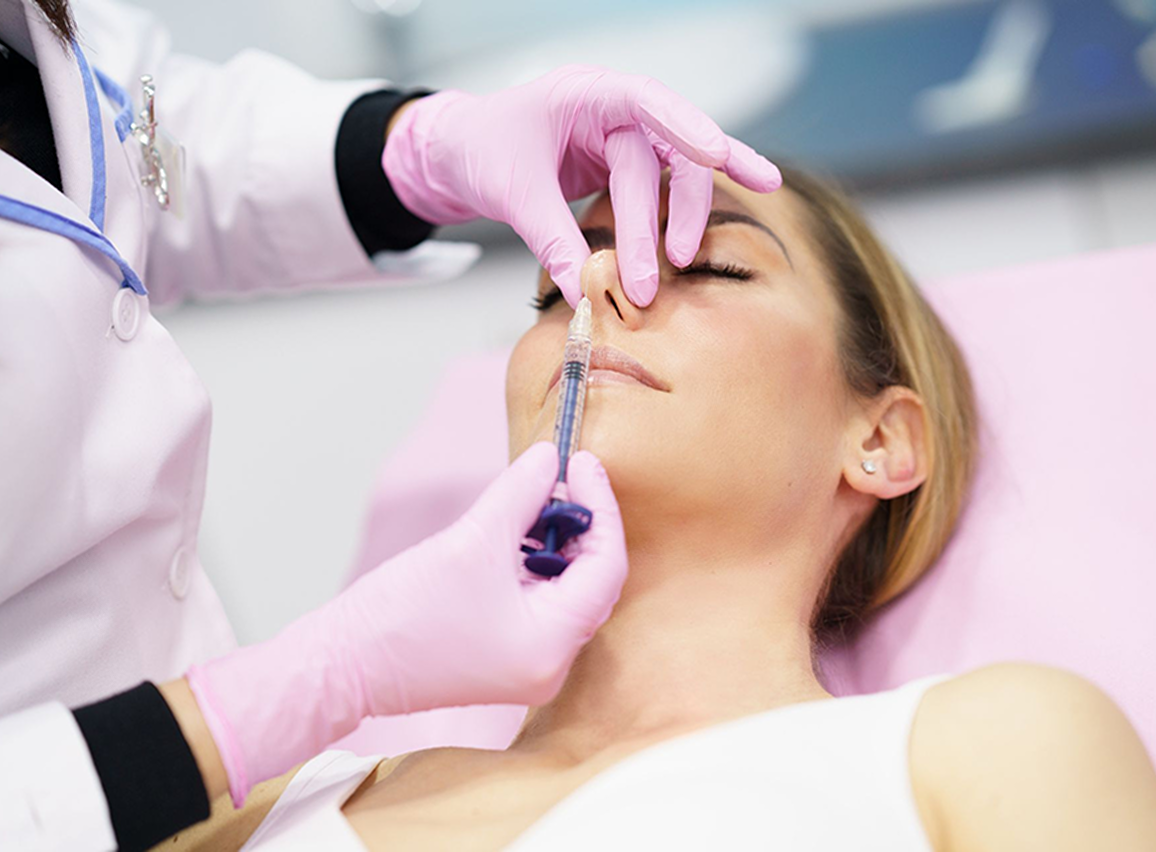
Wrinkle relaxers are injectable treatments, most commonly known by the brand name Botox, along with alternatives like Xeomin, that work by temporarily blocking the nerve signals that cause targeted muscles to contract. Without that repeated contraction, the overlying skin stays smoother, since the muscle movement causing the fold is no longer happening at full strength.
It comes down to cause and effect. If a wrinkle is caused by a muscle folding the skin over and over, reducing that muscle's movement reduces the folding, which allows the skin on top to gradually appear smoother. This is different from a filler, which adds volume rather than affecting muscle movement, which is why wrinkle relaxers are specifically suited to expression-related lines rather than volume loss.
Most clients start noticing initial effects within three to five days, with full results typically visible after seven to ten days. Results generally last around three to four months, after which a maintenance treatment can be scheduled to preserve the effect.
Candidates are typically eighteen years or older and are noticing dynamic wrinkles, lines that appear or deepen specifically with facial expression, in the forehead, between the brows, or around the eyes. Interestingly, younger patients, meaning those who start treatment before deep lines become permanently etched, often see especially smooth, natural-looking results, since the goal is to prevent existing muscle patterns from becoming static wrinkles over time.
Yes. The same mechanism can also be used to soften neck banding, caused by tightening in the platysma muscle, and can even help with excessive muscle contractions in other areas. A consultation is the best place to discuss whether your specific concern is a good match.
Sessions are quick, typically taking well under thirty minutes, with minimal discomfort involved. There's no meaningful downtime, and most clients return directly to their normal schedule afterward.
For a lot of our Buckhead clients, wrinkle relaxers are the very first medical aesthetics treatment they try, and there's a good reason for that. It's a low commitment way to address a very specific, very visible concern, expression lines, without altering anything else about the face. The results wear off naturally over a few months, which makes it a low-risk way to see how a treatment feels before considering anything more involved.
Some clients come in specifically for forehead lines and later realize they're also interested in restoring volume in areas like the cheeks or under the eyes, which falls under dermal fillers rather than wrinkle relaxers, since that's a separate concern involving lost structure rather than muscle movement. Others notice that their skin has also lost some overall firmness, which is more the domain of our skin tightening treatments. A consultation is a good place to sort out which concern is actually driving what you're seeing in the mirror.
Nothing dangerous happens, but over years, the repeated folding from dynamic wrinkles can contribute to lines becoming etched into the skin even at rest, essentially transitioning from dynamic to static wrinkles. This is part of why some people choose to start wrinkle relaxers earlier, as a way of reducing that repeated folding before it becomes a more permanent feature.
There's real logic behind it, though it's not necessary for everyone. Since dynamic wrinkles form from repeated muscle movement, reducing that movement earlier can, for some people, slow the process of those lines becoming permanently etched. That said, plenty of clients start later in life and still see excellent results, so it really comes down to your specific goals and concerns.
How do wrinkle relaxers differ from dermal fillers? Wrinkle relaxers work by reducing the muscle movement that causes expression lines, while dermal fillers restore lost volume beneath the skin. They address two different underlying causes and are sometimes used together depending on your concerns.
Will my face look frozen or unnatural after treatment? When dosed appropriately by an experienced provider, results are designed to soften lines while preserving natural facial movement and expression, not eliminate it entirely.
At what age should someone consider wrinkle relaxers? There's no single right age. Some people start in their late twenties as a preventive measure, while others begin later once expression lines are more established. Candidates must be eighteen or older.
How often will I need to repeat treatment? Results typically last three to four months, after which most clients return for a maintenance session to preserve their results.
Can wrinkle relaxers help with more than just forehead lines? Yes, common treatment areas include the forehead, the area between the brows, crow's feet around the eyes, and even neck banding, depending on your specific concerns.
Expression lines aren't a sign that anything is wrong, they're simply a natural result of a face that laughs, concentrates, and reacts to the world around it. If those lines are starting to stick around longer than you'd like, our Buckhead team can walk you through whether wrinkle relaxers are the right fit for your specific concerns. Book an appointment or browse our full list of services to see what else might complement your goals.

Our Collagen Elixir is a potent skincare ally, promoting elasticity and hydration. Its rich blend of amino acids supports skin regeneration, reducing wrinkles and fine lines for a youthful, radiant complexion.